Departing Pope Accused of Promoting Worship of a Fictional Character

bat phoneDoffing his mitre for the last time today, the Pontiff Formerly Known as Pope Benedict XVI leaves behind a church more embroiled in controversy now than ever before.  Following his slippered heels as they vacate the papal suite that has housed him for 8 years, claims have arisen that the Church’s central figure, a mysterious man named God with no known occupation and one alleged illegitimate son, is not actually a real entity.

“Boy, is our face red,” said Vatican spokesperson Father Federico Lombardi in response to “Vatileaks” documents smuggled out to reporters by the departing pope’s former butler, Paolo Gabriele.  The classified files reveal that not only have certain church authorities known that God was made up, but have actively tried to hide this information from the Catholic public.

“We never considered that the reason there is so much animosity and disagreement between various sects and faiths over what God expects of us, is that everyone has just been making it up as they go along,” said Lombardi.

Cardinals Roger M. Mahony, Sean Brady, and Godfried Danneels, of the US, Ireland, and Belgium respectively, issued a joint statement indicating that their voting on a new pope starting this Friday, is ‘cheapened’ by the revelation that the pontiff to come will be the mouthpiece of a nonentity.  The three cardinals agreed they would not have devoted all that effort shuffling around priests accused of child abuse had they been protecting the reputation of an institution based on say, Huck Finn, or Sherlock Holmes.

“These latest revelations really make a mockery of our work,” said the trinity of aiders and abetters.

The Catholic Church is no stranger to controversy, and in addition to God’s nonexistence and the child abuse accusations that have been emerging since the 1990’s, Pope Benedict XVI’s career has been plagued by scandal.  After offending the world’s Muslims by having major media outlets quote him out of context, he later remitted the excommunication of the bishops of the Pius X society, an organization that includes the restoration of the monarchy, the Vichy regime, and holocaust denial as ‘likes’ on their Facebook page.

The Vatileaks documents stolen from the former office of the pope emeritus have also revealed corruption amongst prelates, bribes accepted for papal audiences, and a cabal of homosexual ecclesiastics blackmailed by jilted lovers amongst the laity.

The summation of these revelations, presumably to be accompanied by damage control proposals, was commissioned by Benedict and produced by three cardinals.  It’s completion prompted the declaration of resignation made by the pope on December 17th, and will greet his replacement, scheduled to take office by March 24th, Palm Sunday.

008 Benedict XVI helicopterHe gave his final public address on Wednesday, and after greeting cardinals in Rome before they elect his successor, Benedict XVI boarded a helicopter bound for his papal retreat.  Professional lip readers are unanimous in their assessment that the words he shouted underneath the roar of the rotary aircraft were indeed, “So long, suckers!”  It has yet to be determined however, if the comment was directed at the ecclesiastical authorities he was leaving behind, or to Catholics in general.

While the former pope has many detractors, few could disagree on one thing : It is extraordinary that his membership to the Hitler Youth ended up being the least controversial thing about him.

The next pope has a difficult task ahead of him.  Not only will he have to contend with a church rife with internal divisions and intrigue, but also one hounded by criticism from without over it’s beliefs and practices.  It doesn’t help that declining numbers of faithful in developed nations, have forced the church to turn to places such as Africa, where it insists on instructing followers to not use condoms, even if that means dying from AIDS.

“Jesus always went bareback,” said Pope John Paul II in 2003.

The Vatican’s secretary of state, Archbishop Carlo Maria Vigano, summed up the coming challenge.

“The next pope will have to separate the wheat from the chaff and punish the wicked so that the rest of us can wash our hands of all these iniquities,” he said, referencing a famous bible verse where one of the characters washed their hands, “That way, we can get back doing the work God put the Church on Earth for, such as laundering money for the mafia.”
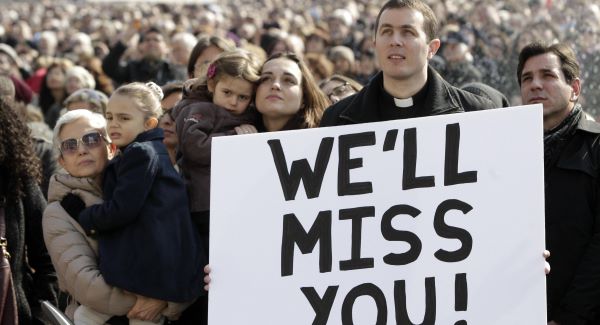
Benedict XVI

Harper-Deployed TeleDrones Reveal the Flaws of First Past the Post

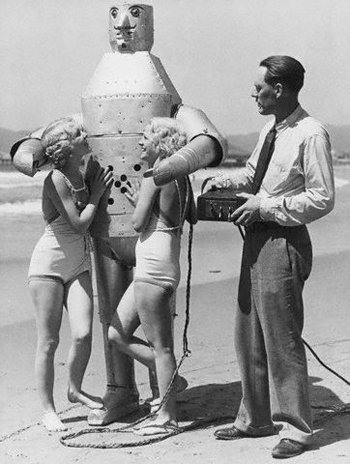
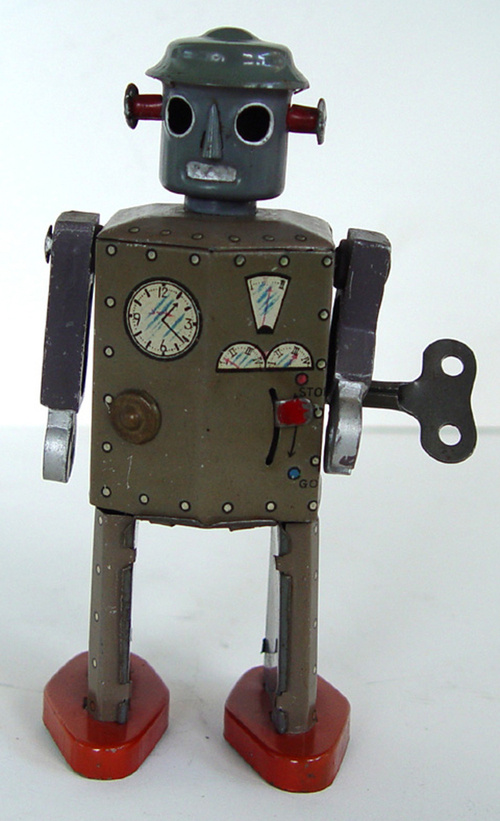
RobotIn what the Conservative party is now calling an “internal miscommunication”, robotic pollsters, claiming to originate from a possibly fictitious company named Chase Research, polled Saskatchewan voters on a proposed redrawing of their electoral boundaries.  Unaware of their Tory origins, the machines misidentified themselves,  for which the Harper government is taking criticism.  It is heartbreakingly sad when a robot is programmed with no knowledge of its master, and we must ask if the poll was influenced by an orphan’s yearning to find its parents.  The Conservatives now admit they made a mistake, but this likely comes as little solace to their telephonic progeny.  The resulting scandal, however, has brought to the forefront the extreme distortions in representative democracy which can result from a first past the post parliamentary system.

“First past the post” describes winner-take-all electoral systems such as Canada’s where each riding counts it’s votes and awards a seat in parliament to the winner.  Those who voted for losing candidates  have effectively no influence on the composition of the government.  Whether you voted for the loyal opposition, the Anarcho-Statist Party of Canada, or yourself, it is irrelevant.  Your vote was counted, but you don’t count at all.  If you are lucky, a hipper, smarter, more enlightened riding has elected another MP of the same party to represent your values in Parliament.  This system explains how a man like Stephen Harper can have 100% of the legislative power with 39.6% of the popular vote, and why smaller parties, such as the Greens, have such a hard time convincing Canadians to throw their vote away on them.

In the 2011 federal election, the Conservative party won 13 of Saskatchewan’s 14 seats with an underwhelming 56.3% of votes.  The Liberals captured the one remaining seat with an adorable 8.6%.  Of the remaining votes, 32.3% of the total went to the NDP and promptly evaporated into irrelevance.

Behind the Numbers saved us the trouble of doing math and tells us that the Conservatives won one seat for every 19 692 votes, the Liberals took only one seat for their 38 981 votes, and the NDP’s 147 084 votes amounted to not one single MP to represent the province.

These disparate vote-to-seat ratios are possible because of the unique character of Saskatchewan’s electoral boundaries. Despite having the two metropolises of Regina and Saskatoon, the province has no purely urban ridings.  Instead, urban voters are divided into wedges and incorporated into larger, rurally-dominated ridings.  It so happens that the NDP and Liberal parties have tended to do better in the cities in recent history, while the Conservatives carry the rural vote, diluting the urban vote in mixed density ridings.

Defenders of the present arrangement claim that creating urban-only ridings would result in rural ridings that are too large, or that rural and urban interests would be pitted against one another.  For the first charge, one only need to look at the ridings of Nunavut, Yukon, and Western Arctic, which comprise the entirety of Nunavut, the Yukon and the North West Territories, respectively.  As to the second, the contrary voting patterns of urban and rural voters show that their interests are already pitted against one another, only the electoral boundaries are drawn in such a way for rural interests to always prevail.

Every ten years, provincially based electoral boundary commissions review these boundaries, and determine whether or not they should be redrawn.  The Conservative push-poll was a response to a proposal to create urban ridings in Saskatchewan.  Automated pollsters warned that these boundary changes would “destroy Saskatchewan values,” though it is questionable whether the 43.7% of those who did not vote Tory would agree.

“The Saskatchewan boundary commission has decided to ignore our important traditions and history,” said the drones.

The Dief

The Dief

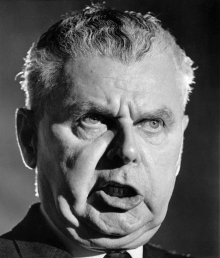
This is not the first time federal Conservatives have invoked history to attack a proposed redrawing of Saskatchewan’s ridings.  In 1966, infamous conservative android John Diefenbaker attacked the first remapping in Saskatchewan following the implementation of the Electoral Boundaries and Adjustment Act, for defying historical precedent.  The changes in question were the elimination of urban ridings in Regina and Saskatoon.

In 2003, the NDP fought against a proposal to reinstitute Saskatchewan’s urban ridings.  Success in that debate paved the way for zero NDP members of Parliament in the province over four consecutive federal elections.

This inconsistent partisanship on the matter suggests there may be no inherent advantage for one party or another in how Saskatchewan’s electoral boundaries are drawn.  If a third of the province’s voters can’t elect a single MP of their party of choice, however, there is indeed something wrong with the system.  One solution is to redraw boundaries to better reflect shared interests, values, and geography.

Yet to do so would be to preserve an electoral system that denies everyone who voted for their riding’s runner up representation.  In 2011, the Liberals received 11% of seats for 18.9% of the votes Canada-wide. The Bloc got 6% of the popular vote, but only 1% of seats.  Elizabeth May’s seat represents 0.3% of Parliament, but her Green Party received 3.9% of votes.  Only the NDP was consistent, despite their troubles in Saskatchewan, with a third of seats representing a third of Canada’s voters.  The Conservatives were the only party to come out ahead.

Were Canada to adopt a proportional representation system, where parliamentary seats are divvied up based on the popular vote, all voters would be represented. Stephen Harper would likely not be the Prime Minister, and most Canadians would be happy about that.  Best of all, nobody would be arguing about the electoral boundaries of Saskatchewan, as federal politicians have been for half a century.

The NDP insists that they “would never countenance a  deceitful phone campaign designed to coerce an independent boundary commission to bow to political pressure.”

Atop such a high horse, it is surprising the NDP can’t see the big picture. The distorted relationship between seats and votes revealed by the off label pollbot controversy has created the perfect moment to push for proportional representation, which the party has supported for years.

The Conservatives did not break any rules by creating the poll, electoral commissions are non-partisan entities which welcome opinions from voters and political parties.  That these polls did not mention they were asking on behalf of the Conservative Party of Canada may constitute a breach of ethics, but that is beside the point.

The dissenting opinion on Saskatchewan’s boundary commission, issued a report  claiming that 75% of submissions received regarding the proposal were against it.  If indeed this number is correct, and the majority of Saskatchewan voters oppose the proposed redrawing of electoral boundaries, should that even matter?  Clearly there is a substantial minority of the Saskatchewan electorate whose votes in the 2011 federal election have produced no representation.  It is unsurprising that the winners of the day should oppose rule changes that would benefit the losers, but that does not mean a dictatorship of the majority should be allowed to dilute the political voice of a substantial voting bloc.

In 1964, Prime Minister Pearson, with the unanimous support of Parliament, passed the Electoral Boundaries Adjustment Act, leading to the development of provincial commissions in charge of drawing electoral boundaries.  The law was the end product of a push for independently minded commissions started by Prime Minister Diefenbaker, who was responding to perceived gerrymandering in Saskatchewan by the Liberal party.  Forty-nine years later, the ridings of that province are making national news again.

It would be fitting if a minor scandal over techno-foundlings led to a broader discussion on Canada’s electoral system in the same province where the dread beast Gerrymander was slain.  It would be good if such discussions led to the adoption of some form of proportional representation and a functional democracy that represented all whom voted.  Unfortunately, with a majority government that benefits from the status quo, and two parties on the left unable or unwilling to seriously consider a coalition, it’s probably not going to happen.

Chicks love robots.

Chicks love robots.

Further Reading :

An excellent and concise history of Canada’s laws regarding electoral boundaries at Pundit’s Guide

Syria’s Chemical Cocktail Makes World Leaders Loose and Giddy

Bashar Assad offering one of his trademark conciliatory gestures.

Bashar Assad offering one of his trademark conciliatory gestures.

In the geopolitical equivalent of standing next to the fat girl in order to look skinny, the international community eagerly awaits Syria’s use of chemical weapons upon its own people, to take the heat off of them from their own critics.

Infotainment professionals in the United States have repeated reports from unnamed sources in the US government, whom are said to be reliable, that increased activity has been seen at Syrian sites which house weapons of mass destruction.  It is believed that Syria possesses the ingredients for sarin, a deadly nerve agent, and that President Bashar Assad could be in the process of preparing the chemical for use against rebel forces in Syria’s 20 month civil war.

World leaders have greeted these reports with a mixture stern warnings and sighs of relief.  Gods & Services presents a weekly round-up of the international response:

Russia celebrated the increased pressure on Syria by killing 3 more journalists and imprisoning another punk band, Dick Party.

“Their new album was really disappointing,” said Vladimir Putin, “after they replaced their original guitarist they haven’t been the same.”

Turkey welcomed the news in the face of criticism for its jailing of thousands of Kurdish citizens since 2009, including many journalists and human rights activists.

“Turkey is a democracy,” said Prime Minister Tayyip Erdogan, “it’s not my fault if the 18 million Kurds here can’t vote themselves up some civil rights.  There are proper ways to oppress people in the civilized world, Assad just doesn’t understand that.”

In a joint press conference with German Chancellor Angela Merkel, Israeli Prime Minister Benjamin Netanyahu admitted that if Assad does make use of his stockpile of sarin, images of sweaty, twitching Syrians unable to breath, with drool and vomit spewing from their mouths and excrement dripping down their pant legs, will be a breath of fresh air for his nation.

As one of few countries to have not signed the nuclear Non Proliferation Treaty, and widely believed to possess an arsenal of nuclear weapons, Netanyahu hopes Syrian war crimes will put to rest the recent request by the United Nations General Assembly for weapons inspectors to be allowed into Israel.

Chancellor Merkel herself addressed the issue in light of the ongoing European economic crisis.

“Maybe Germany can finally get back to imposing crippling austerity measures upon Greece without incurring any criticism now,” she said, “and just generally carrying on as if we’ve never heard of a man called John Maynard Keynes.”

Amidst the unnecessary rubble of the recent 8 day war, in which Hamas learned once again that perhaps they cannot take on the Israeli Defense Force through military means, a spokesman was quoted to say: “Hopefully, once Assad releases the gaseous atrocity upon his own people, it will really put the Palestinian issue in context.  Maybe then the world will see that launching 1500 crude rockets over the heads of terrified civilians isn’t such a bad thing.”

In the United States, a group of jubilant Marines celebrated the coming war crimes by urinating upon the naked body of Bradley Manning after his recent appearance in court.  Manning faces charges over his leak of classified videos documenting American war crimes in Iraq and Afghanistan.

“We can finally get back to business as usual,” said Brigadier General Chuck Choda, “Drone strikes may kill a lot of civilians, but as the leaked videos demonstrate, you can have a lot more fun when you’re right there to pull the trigger yourself.”

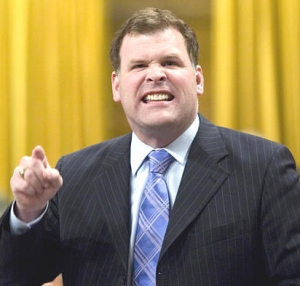
John Baird attempting to contain his enthusiasm.

John Baird attempting to contain his enthusiasm.

Canadian Minister of Foreign Affairs John Baird, was similarly grateful for the new round of condemnation upon Syria.

“Our government has received a lot of flak domestically and internationally for being one of the few countries to oppose the Palestinian Authority’s unilateral move to gain multilateral recognition.  As if seeking  status as a state in any way furthers the goal of finding a two-state solution.  It’s ridiculous.”

“Hopefully, if Syria starts firing deadly toxins upon is populous, people will stop talking about me.  And with a little luck, Canada can stand by and do as little as possible while thousands die.  It’s worked so far.”

Indeed, with an estimated 40,000 dead since the civil war broke out in March 2011, news coming out of Syria has become rather stale.  To date, these deaths have been caused almost exclusively by traditional bullets and explosions, a relatively boring way to die which fails to meet the basic threshold of entertainment value that would provoke a humanitarian intervention.  Should Assad use weaponized sarin upon the Syrian people, particularly civilians, world leaders can embark on a new round of grand standing and venting of moral indignation.  The inevitable footage of prone bodies, either paralyzed or dead, will send a strong message to their own constituents to be happy with what they have.